
You know that feeling when you bite into something and it tastes like summer itself? That’s bruschetta pasta. I love serving this alongside roasted broccolini for a complete meal, or pairing it with homemade olive bread to soak up every last drop of that gorgeous tomato sauce. It’s the kind of dish that makes you feel like you spent hours in the kitchen, but honestly? You didn’t.
How I Fell in Love With This Simple Dish
Last summer, I was at a farmer’s market in Concord on a Saturday morning—the kind where the basil smells like pure green joy and the tomatoes are still warm from the sun. I grabbed way too many heirloom tomatoes because they looked absolutely perfect, and I genuinely had no idea what I was going to do with them all.
That night, I threw together pasta with those tomatoes, some fresh basil from my garden, good olive oil, and garlic. It was impulsive. It was simple. It was the most delicious thing I’d eaten in weeks. My family asked for it again the next night, and the night after that. Now it’s a summer staple in my house, and I make it probably once a week when tomatoes are at their peak.
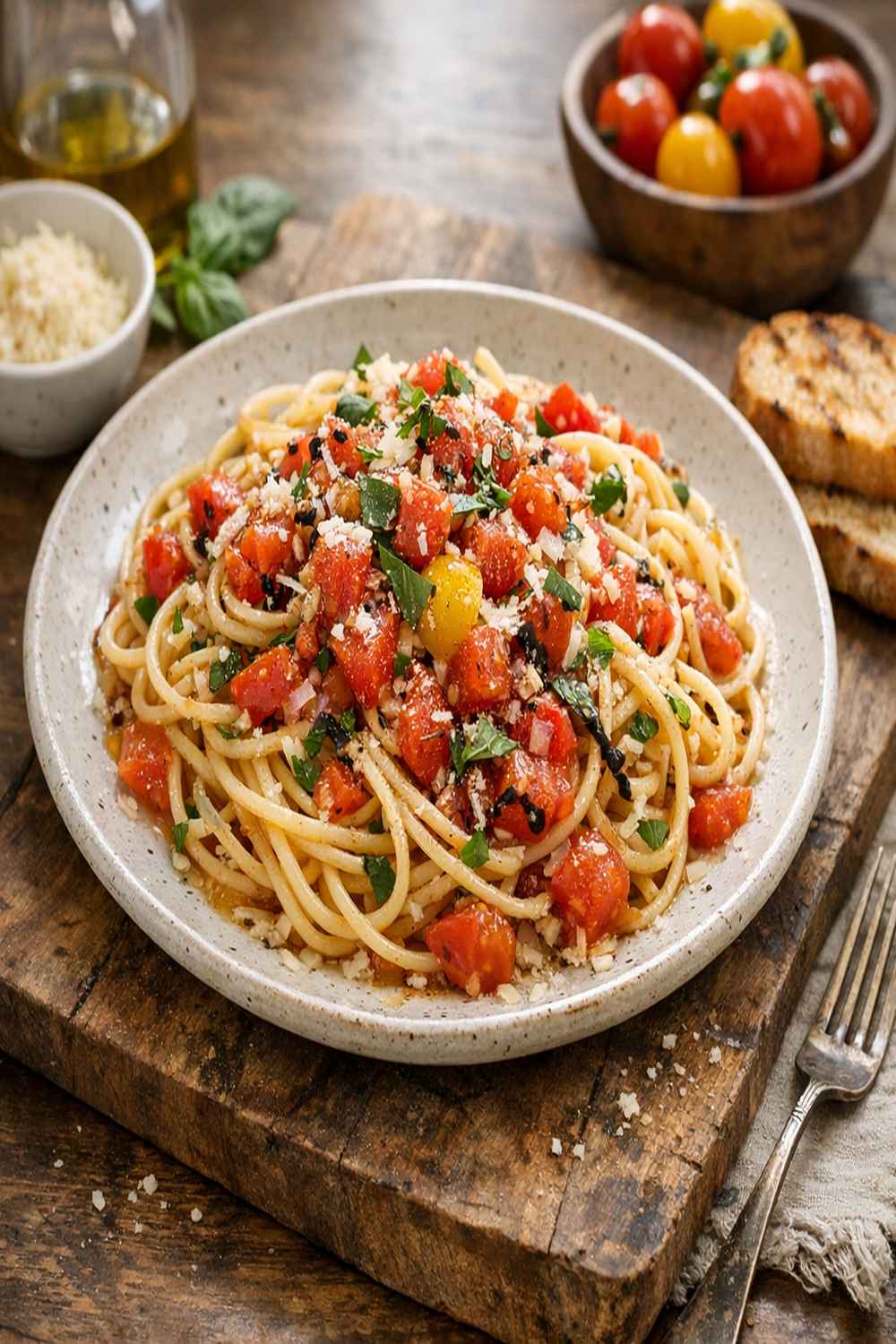
What is Bruschetta Pasta?
Bruschetta pasta is the elegant cousin of two Italian classics: traditional bruschetta (that toasted bread appetizer) and fresh pasta dishes. It takes all those vibrant, fresh flavors you love on bruschetta—ripe tomatoes, fragrant basil, garlic, quality olive oil—and tosses them with hot pasta instead of serving them on bread.
The beauty here is that you’re not cooking the tomato sauce the traditional way. There’s no simmering pot or long ingredient list. You’re building flavor by letting fresh ingredients sit together, allowing the acidic tomatoes to soften the cheese, the garlic to infuse the oil, and everything to become this cohesive, fresh mixture that clings to every strand of pasta.
It’s Italian simplicity at its best: when you have great ingredients, you don’t need much else.
Why You’ll Love This Bruschetta Pasta Recipe
- It’s ridiculously fast – From start to finish, this takes about 20 minutes. That’s dinner on the table before you know it, and it tastes like you actually tried.
- Minimal cleanup required – You need one pot for pasta and one bowl for everything else. I’m all about weeknight dinners that don’t destroy your kitchen.
- Packed with fresh vegetables – You’re getting real tomatoes, fresh basil, and garlic. As a registered dietitian, I love that this dish is naturally nutrient-dense without feeling like you’re “being healthy.”
- Completely customizable – Have different pasta? Use it. Prefer less parmesan? Skip half of it. This recipe bends to what you have on hand.
- Tastes even better the next day – The flavors deepen as they sit, which is unusual for fresh pasta dishes. It’s great for meal prep.
- Works for literally any occasion – Weeknight dinner, picnic side dish, potluck contribution. This fits everywhere.
The Ingredients
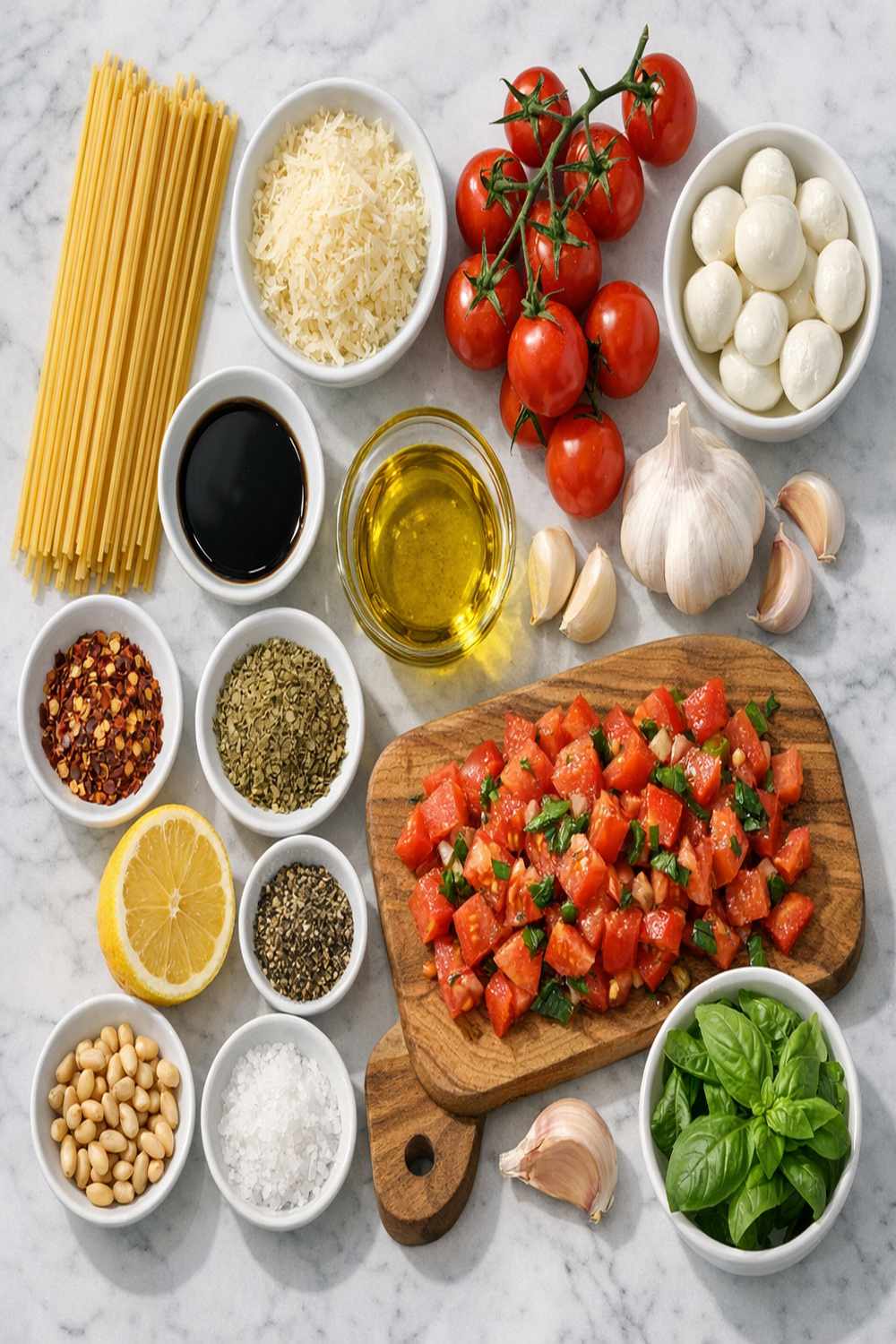
I love how short this ingredient list is. There’s nowhere to hide with bruschetta pasta—everything needs to pull its weight. Here’s what you need:
- 1 tablespoon balsamic vinegar (adds depth and a subtle sweetness)
- 2 cloves garlic (minced into small pieces so the flavor distributes evenly)
- ¼ cup extra-virgin olive oil (use something you actually like tasting, this isn’t the place for cheap oil)
- ½ cup fresh basil leaves (cut into thin ribbons or roughly chopped, your preference)
- Kosher salt and black pepper (to taste)
- 8 ounces pasta (any shape you prefer—penne, fusilli, spaghetti all work beautifully)
- Red pepper flakes (optional, but I always add a pinch for subtle heat)
- 2 cups chopped tomatoes (Roma, heirloom, or cherry tomatoes all work—just use what’s ripe)
- ½ cup shredded parmesan cheese (fresh if possible, not the pre-shredded kind in the green can)
Serves: 4 people as a main course, or 6 people as a side dish
How to Make Bruschetta Pasta
Let me walk you through this step by step. It’s straightforward, but a couple of timing tricks make all the difference.
Step 1: Get Your Water Boiling
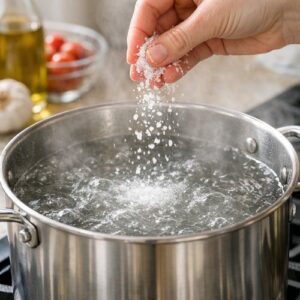
Fill a large pot with water and add a good pinch of kosher salt—we’re talking about as much salt as a handful of chips. I know it seems like a lot, but this is your only chance to season the pasta itself. Bring it to a rolling boil, which should take about 8-10 minutes depending on your stove.
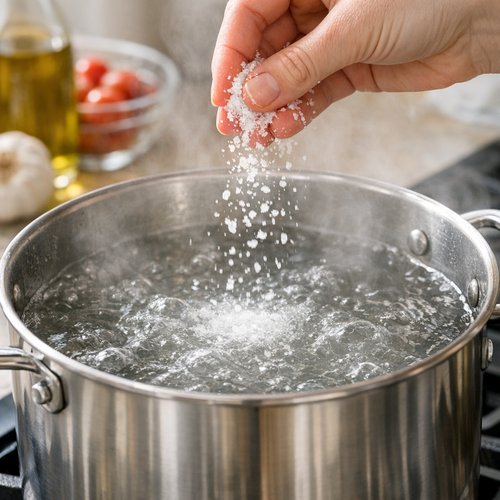
While you’re waiting for that water, move to the next step. No point in standing around.
Step 2: Build Your Bruschetta Bowl
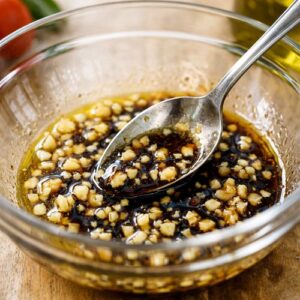
In a large mixing bowl, add your minced garlic, the ¼ cup of extra-virgin olive oil, and the balsamic vinegar. Stir these three together and let them sit for just a minute. The olive oil will start warming the garlic slightly, releasing its aromatic compounds (I’m not using that word lightly—this is where the flavor magic begins).
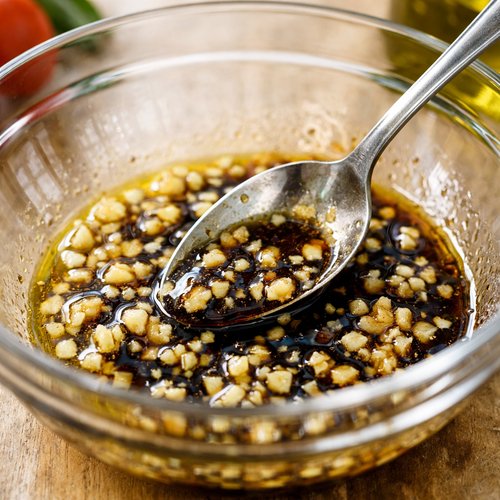
Now add your chopped tomatoes, fresh basil, shredded parmesan, kosher salt (about ½ teaspoon), and black pepper (about ¼ teaspoon). Give everything a gentle stir—don’t mash the tomatoes, just toss it all together.
Set this aside and let it hang out. The tomato juice will start releasing into the oil, creating this beautiful liquid that’s going to become your sauce. Stir it occasionally while you cook the pasta.
Step 3: Cook Your Pasta to Al Dente
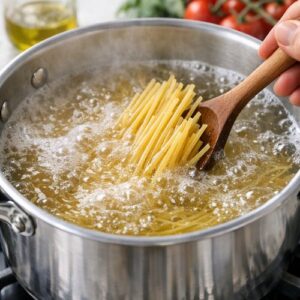
Once your water is at a rolling boil, add your 8 ounces of pasta. Give it a stir immediately so nothing sticks together. Follow the package directions, but start checking for doneness about one minute before the time suggests. You want it al dente—tender but still with a slight firmness when you bite it. That texture matters here because the pasta will continue softening slightly once it hits that warm bruschetta mixture.
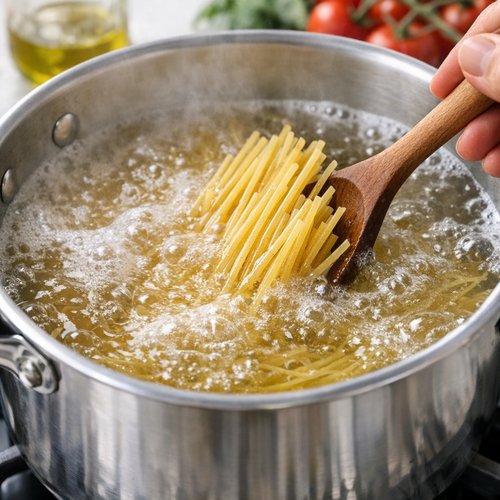
Here’s my trick: use a slotted spoon to fish out a piece and taste it. When it’s perfect, you’ll know.
Step 4: Combine Pasta With Bruschetta
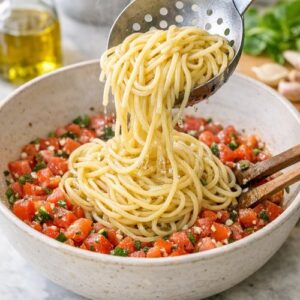
When your pasta is done, use a slotted spoon to transfer it directly from the hot water into your bruschetta bowl. Some of that hot pasta water will cling to the noodles—that’s intentional. It helps blend everything together beautifully.
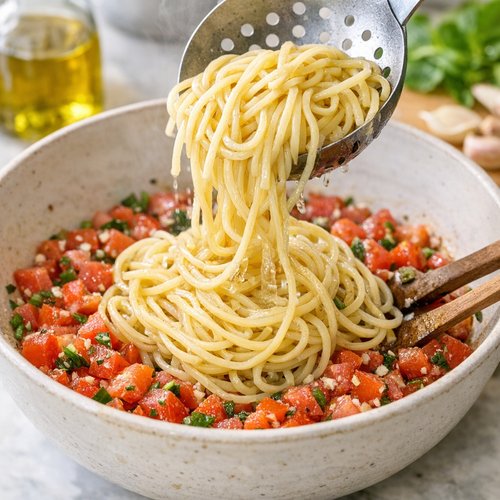
If you prefer, you can drain your pasta in a colander, but then reserve about ¼ cup of that starchy pasta water and stir it in. The starch helps create a light, cohesive sauce instead of everything just sitting separately.
Step 5: Let It Rest and Thicken
Give everything a good toss, then let it sit for about 5 minutes. I know that feels weird—like you should serve it immediately—but trust me. This rest time lets the pasta absorb all those fresh flavors. The starch from the pasta will slightly thicken everything, creating a light sauce that clings to the noodles instead of pooling at the bottom of the bowl.
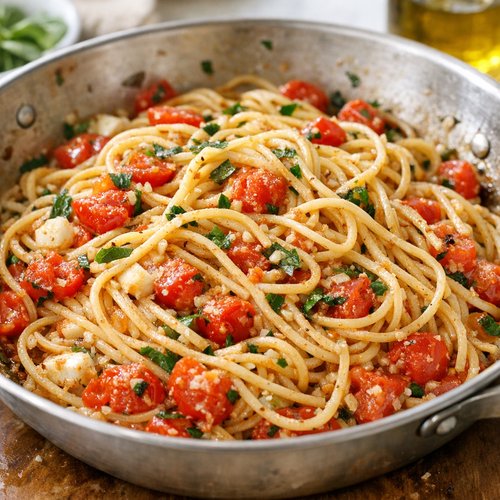
Stir it occasionally during this rest. Taste it. Add more salt, pepper, or basil if you want. This is your moment to adjust.
Step 6: Serve and Enjoy
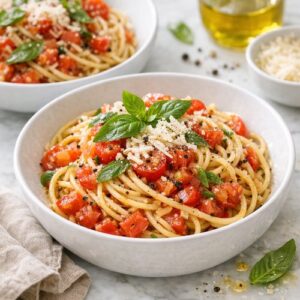
Divide into bowls and top with extra fresh basil, a little more parmesan, and a crack of black pepper. If you want to get fancy, add a small drizzle of good olive oil and a few red pepper flakes.
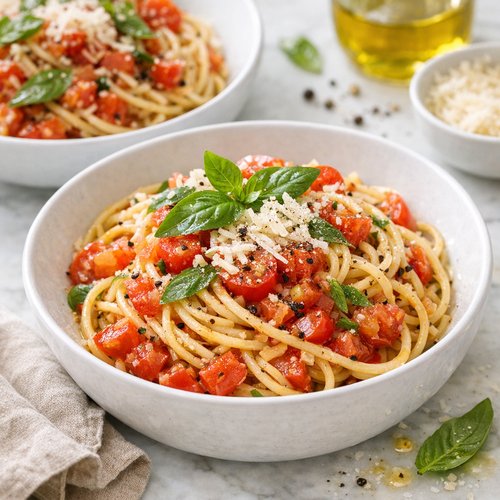
Serve immediately while it’s still warm. This dish is best fresh, though leftovers are surprisingly good cold as a pasta salad.
Expert’s Nutritional Tip
Here’s something I talk about with clients constantly: the fat in olive oil actually helps your body absorb the fat-soluble vitamins in tomatoes (especially lycopene). That’s why I never skip the good olive oil in this recipe—it’s not just flavor, it’s nutrition strategy. The combination of fresh vegetables plus quality fat plus whole grain or enriched pasta creates a pretty balanced meal. I usually feel satisfied for hours after eating this, and my energy stays steady because we’ve got carbs, protein, and healthy fats working together.
Tips and Tricks
- Use the ripest tomatoes you can find – This whole recipe lives and dies by your tomato quality. Go to a farmer’s market if you can. They should smell sweet and yield slightly to pressure. Pale, mealy supermarket tomatoes won’t give you the same result.
- Don’t skip the pasta water – That starchy water is an emulsifier. It helps bring everything together instead of having greasy pasta with a puddle of oil at the bottom. Trust the pasta water.
- Cut your basil at the last possible moment – If you cut it too far ahead, it’ll start to brown and develop a metallic taste. I usually cut it right after I put the pasta in the water.
- Taste as you go – This is fresh food, which means seasoning needs to be adjusted. What tastes good at 5 minutes might need more salt at serving time because the flavors shift.
- Use a good quality parmesan – Pre-shredded parmesan has anti-caking agents that make it grainy. Real parmigiano-reggiano shredded fresh makes a huge difference in the final texture.
- Keep the heat low when combining – If you mix hot pasta with a cold bowl and let it rest, the residual heat from the pasta gently warms everything without cooking the fresh basil or making the tomatoes mushy.
Can I Store Bruschetta Pasta?
Yes, and this is one of those surprising dishes that gets better as it sits. Store it in an airtight container in the refrigerator for up to 3 days. The flavors actually deepen and meld together—it’s excellent as a cold pasta salad the next day.
You can reheat it gently on the stovetop over low heat if you prefer it warm, stirring in a splash of pasta water to loosen it up. Or serve it straight from the fridge as a cold side dish. Both are delicious.
I don’t recommend freezing this because the texture of the fresh tomatoes gets weird once thawed, and the basil flavor fades significantly. Fresh is really the way to go here.
Nutrition Information
Based on USDA nutritional data, one serving (about 1 cup, assuming 4 servings total) contains approximately 340 calories, 12g protein, 14g total fat, 45g carbohydrates, and 3g dietary fiber. The parmesan provides calcium, the tomatoes deliver lycopene and vitamin C, and the olive oil gives you those heart-healthy monounsaturated fats.
From a nutritional standpoint, this is exactly the kind of pasta dish I encourage clients to eat regularly. It’s not heavy, it’s got real vegetables, and it’s balanced enough to keep your energy stable throughout the afternoon.
Common Mistakes to Avoid
- Using jarred tomato sauce instead of fresh tomatoes – I get why people do this, but it completely changes the dish. This needs the brightness and texture of fresh tomatoes. If tomatoes aren’t in season, honestly, make something else. Frozen tomatoes work better than jarred sauce here.
- Cooking the basil – Basil is delicate. It should never hit a hot stove. Even mixing it with the hot pasta is fine because it’s just warmth, not actual cooking. But if you’re tempted to sauté it in oil first, resist. It turns bitter and loses that fresh quality.
- Skipping the rest period – I understand the urge to serve immediately, but those 5 minutes really do matter. That’s when everything pulls together and the flavors marry. Without it, you’ve got good components that haven’t become a cohesive dish yet.
- Using cold ingredients straight from the fridge – Let your tomatoes and basil sit on the counter for 30 minutes before you make this. Cold tomatoes don’t release their juices as readily, and you lose flavor. Room temperature ingredients perform much better.
Make-Ahead Guide
Up to 2 hours before serving: Chop your tomatoes and basil, mince your garlic, and combine everything in your bowl (except don’t add the hot pasta yet). Cover with plastic wrap and keep at room temperature. This actually improves flavor as ingredients meld together.
Up to 4 hours before serving: Prepare all ingredients separately and store in the fridge, but combine them only when you’re about to cook the pasta. Cold ingredients sitting together for too long can get watery.
For meal prep: Make the complete dish and store in airtight containers. It keeps for 3 days and is fantastic cold. This is perfect for lunch throughout the week—just grab a container and go.
Do NOT prep ahead: The pasta itself. Always cook it fresh, right before serving. Pre-cooked pasta that sits will get mushy.
Seasonal Variations
Summer (peak season): Use whatever heirloom tomatoes look best. Add fresh corn kernels for sweetness, or crispy prosciutto torn into pieces. This is the time to shine.
Early fall: Cherry tomatoes are still good. Add roasted red peppers for depth, or throw in some toasted pine nuts for texture. A touch more balsamic vinegar works nicely too.
Winter: Use canned San Marzano tomatoes (they’re actually better than bad fresh tomatoes). Add roasted garlic instead of raw, and consider adding crispy bacon or pancetta for richness since fresh tomatoes aren’t available.
Spring: When fresh tomatoes are just arriving, they might not be perfect yet. Mix them with some quality jarred roasted red peppers. Add fresh peas or snap peas for spring freshness, and consider adding fresh mozzarella or burrata for creaminess.
What Can I Serve With Bruschetta Pasta?
This dish is versatile enough to work as the centerpiece or as part of a larger meal. Here’s what I usually put alongside it:
- A crisp green salad – Something simple with lemon vinaigrette cuts through the richness beautifully. Nothing competing, just a fresh counterpoint.
- Homemade olive bread – This olive bread recipe is perfect for soaking up those last bits of oil and tomato juice.
- Roasted vegetables – Roasted broccolini is my go-to, but roasted zucchini, eggplant, or bell peppers all work. It rounds out the meal and adds more vegetables.
- Grilled protein – If you want to make it heartier, a grilled chicken breast, shrimp, or white fish on the side works beautifully. The fresh flavors of the pasta complement lighter proteins especially well.
- Garlic bread – For when you’re not trying to be healthy and just want comfort. The garlic flavors actually complement each other perfectly.
Substitutes
- Different pasta shapes – Penne holds the sauce beautifully, but so does fusilli, rigatoni, or even angel hair. Use what you have. Just adjust cooking time accordingly since thinner pasta cooks faster.
- Fresh mozzarella instead of parmesan – Tear fresh mozzarella into chunks and stir it in at the end. It’ll soften from the heat and create a creamier dish. Less salty, more luxurious.
- Lime juice instead of balsamic vinegar – It shifts the flavor profile toward something more Mediterranean. Balsamic is more classic, but lime adds brightness.
- Oregano or mint instead of basil – Both work if basil isn’t available. Oregano is more herbaceous and robust; mint adds unexpected freshness. Neither is traditional, but both are delicious.
- Cherry or grape tomatoes instead of regular – Quarter them and use the same amount. They’re sweeter and less watery, so adjust salt accordingly.
- Pine nuts or toasted walnuts – Add texture and richness. Sprinkle them on at the end for crunch, or stir them in while the pasta is still warm.

Bruschetta Pasta Recipe
Ingredients
Method
- Fill a large pot with water and add a good pinch of kosher salt—we're talking about as much salt as a handful of chips. I know it seems like a lot, but this is your only chance to season the pasta itself. Bring it to a rolling boil, which should take about 8-10 minutes depending on your stove. While you're waiting for that water, move to the next step. No point in standing around.
- In a large mixing bowl, add your minced garlic, the ¼ cup of extra-virgin olive oil, and the balsamic vinegar. Stir these three together and let them sit for just a minute. The olive oil will start warming the garlic slightly, releasing its aromatic compounds (I'm not using that word lightly—this is where the flavor magic begins). Now add your chopped tomatoes, fresh basil, shredded parmesan, kosher salt (about ½ teaspoon), and black pepper (about ¼ teaspoon). Give everything a gentle stir—don't mash the tomatoes, just toss it all together. Set this aside and let it hang out. The tomato juice will start releasing into the oil, creating this beautiful liquid that's going to become your sauce. Stir it occasionally while you cook the pasta.
- Once your water is at a rolling boil, add your 8 ounces of pasta. Give it a stir immediately so nothing sticks together. Follow the package directions, but start checking for doneness about one minute before the time suggests. You want it al dente—tender but still with a slight firmness when you bite it. That texture matters here because the pasta will continue softening slightly once it hits that warm bruschetta mixture. Here's my trick: use a slotted spoon to fish out a piece and taste it. When it's perfect, you'll know.
- When your pasta is done, use a slotted spoon to transfer it directly from the hot water into your bruschetta bowl. Some of that hot pasta water will cling to the noodles—that's intentional. It helps blend everything together beautifully. If you prefer, you can drain your pasta in a colander, but then reserve about ¼ cup of that starchy pasta water and stir it in. The starch helps create a light, cohesive sauce instead of everything just sitting separately.
- Give everything a good toss, then let it sit for about 5 minutes. I know that feels weird—like you should serve it immediately—but trust me. This rest time lets the pasta absorb all those fresh flavors. The starch from the pasta will slightly thicken everything, creating a light sauce that clings to the noodles instead of pooling at the bottom of the bowl. Stir it occasionally during this rest. Taste it. Add more salt, pepper, or basil if you want. This is your moment to adjust.
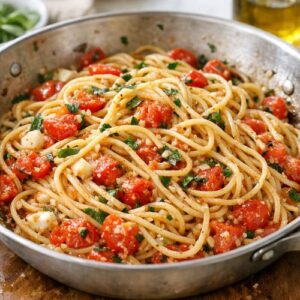
- Divide into bowls and top with extra fresh basil, a little more parmesan, and a crack of black pepper. If you want to get fancy, add a small drizzle of good olive oil and a few red pepper flakes. Serve immediately while it's still warm. This dish is best fresh, though leftovers are surprisingly good cold as a pasta salad.
Nutrition
Notes
Tried this recipe?
Let us know how it was!FAQs
Can I make this pasta ahead and reheat it?
Yes, and it actually holds up surprisingly well. Store it in an airtight container in the refrigerator for up to 3 days. To reheat, place it in a skillet over low heat with a splash of pasta water or a drizzle of olive oil, stirring gently until warmed through. Or serve it cold straight from the fridge as a pasta salad—honestly, cold bruschetta pasta is fantastic for summer lunches. The flavors have melded together beautifully by the next day.
What if my tomatoes are watery?
It happens, especially with supermarket tomatoes. You have a couple options: chop them and let them drain in a colander for 15 minutes before adding to the bowl, which removes excess liquid. Or add them to the bowl but drain some of the liquid before tossing with the pasta. The goal is flavorful tomato pieces, not a watery sauce.
Can I use dried basil instead of fresh?
Technically yes, but I really wouldn’t. Dried basil loses the bright, fresh quality that makes this dish special. It becomes more muted and slightly musty. If fresh basil isn’t available, use oregano or parsley instead—they hold up better when dried. But if possible, seek out fresh basil. It’s usually available year-round at most grocery stores.
Is this gluten-free?
The pasta needs to be gluten-free, but yes, you can absolutely make this dish that way. Use any gluten-free pasta you prefer, and follow the same cooking instructions. Everything else in the recipe is naturally gluten-free. Gluten-free pasta sometimes absorbs liquid differently, so you might need slightly less pasta water when combining.
Can I add protein to make it more filling?
Absolutely. Grilled chicken sliced and tossed through, shrimp sautéed quickly, or crumbled Italian sausage all work beautifully. You could also add white beans or chickpeas for plant-based protein. Just consider how those additions will change the flavor profile—something mild like chicken or white beans complements the fresh tomato flavor. Something stronger like Italian sausage becomes more of a co-star rather than a supporting ingredient.
More Recipes You’ll Love
- Jamie Oliver Spaghetti Recipe – Another beautiful fresh pasta approach that celebrates simple ingredients
- Jamie Oliver Oven Roasted Tomatoes Recipe – For when you want to deepen those tomato flavors through roasting
- Sautéed Mushrooms Recipe – Perfect alongside or mixed into pasta for earthiness and umami
Bruschetta pasta is one of those dishes that reminds me why I love cooking so much. You’re not trying to impress anyone with complicated technique. You’re just celebrating good ingredients and letting them do what they’re meant to do. Some of my best meals have been this simple—pasta, tomatoes, basil, oil. Nothing fancy, everything delicious.
Make this when tomatoes are at their peak, share it with people you care about, and maybe grow some basil in your kitchen so you have it on hand whenever the craving hits. That’s what I do, and I wouldn’t change a thing.
Happy cooking!