
I’ve learned over the years that great fish doesn’t need complicated sauces or heavy preparations. A really good marinade is honestly all you need to turn a beautiful ahi tuna steak into something restaurant-worthy. This Asian-inspired marinade sits somewhere between Japanese and Hawaiian flavors—umami-rich, bright with citrus, and finished with a kiss of sesame. Serve it over a bed of greens, alongside roasted vegetables, or even as part of a Asian-inspired bowl like this soy-ginger salmon, and you’ve got a meal that feels fancy but comes together faster than you’d think.
How I Fell in Love With This Marinade
A few summers ago, my neighbor invited me to a potluck dinner party in our New Hampshire backyard. She served seared ahi tuna with this exact marinade, and I was completely stopped in my tracks. The crust was golden and barely set, the inside was buttery and tender, and that sauce—it had this perfect balance of salty, sweet, and nutty that made you want another bite immediately.
I asked for the recipe right there, standing with a paper plate in hand. She laughed and said it was so simple she almost didn’t want to share it because she worried I’d think it was too easy. But here’s the thing: the simplest recipes are often the best ones. They let quality ingredients shine without fussing around. That night changed how I approach cooking fish at home.
What is Ahi Tuna Marinade Recipe?
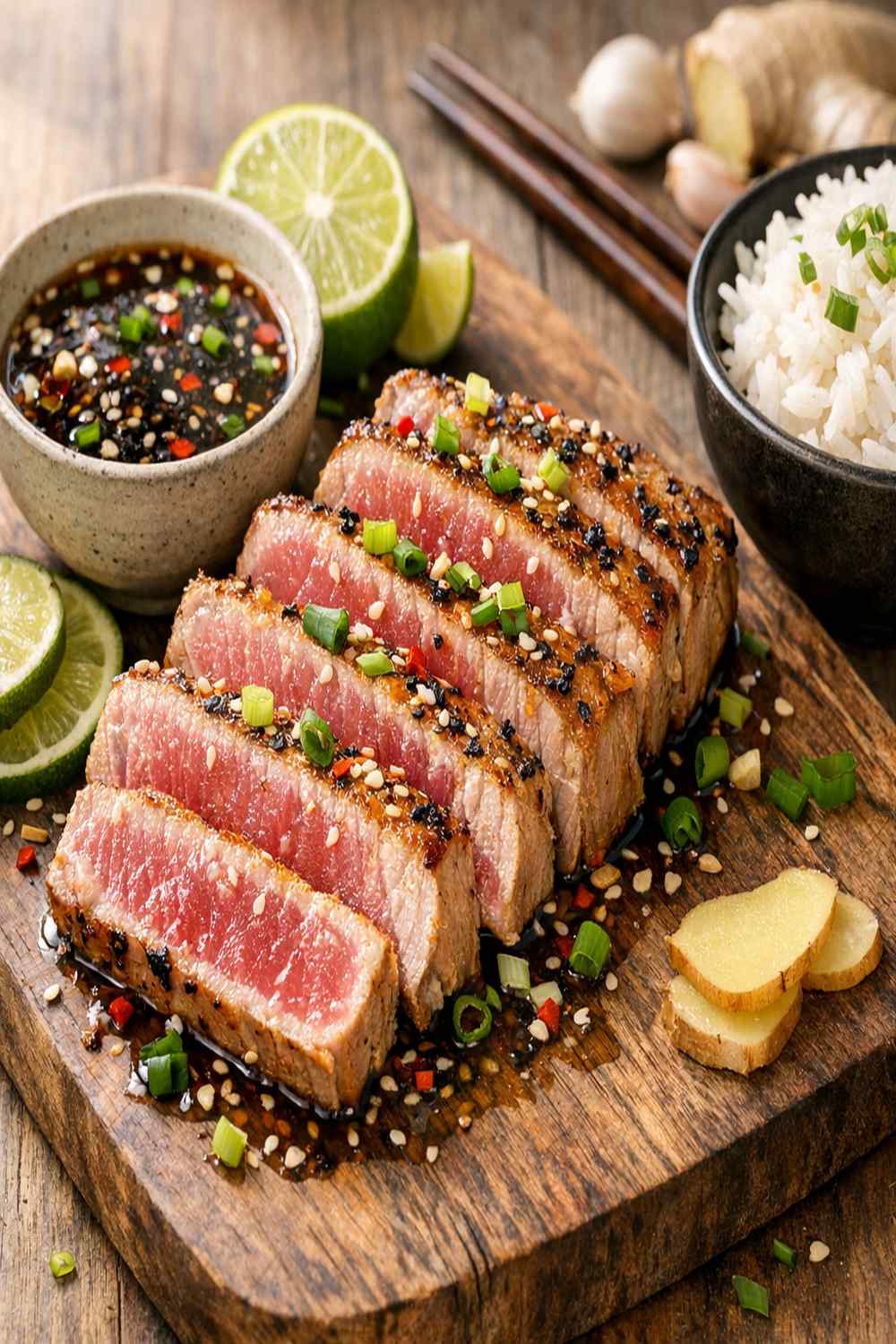
Ahi tuna marinade is a quick-mixing blend of soy sauce, fresh citrus, sesame oil, and garlic that’s designed to flavor thick tuna steaks in just a few hours. The beauty of this particular recipe is that it respects the fish itself—there’s no overpowering spice, no heavy cream, nothing that masks what makes ahi so special.
The technique here is equally important as the marinade. You’re not cooking the fish in the marinade like you would with raw fish for ceviche. Instead, you’re marinating for a few hours to develop flavor, then giving each steak a quick sear in a hot pan to create a golden crust while keeping the center barely cooked and tender. It’s that contrast between the caramelized outside and the barely-kissed inside that makes this dish so addictive.
This marinade draws inspiration from Hawaiian plate lunch culture mixed with Japanese flavors you’d find in teriyaki and soy-based preparations. It’s become a staple in coastal restaurants for good reason—it’s fast, it’s elegant, and it works.
Why You’ll Love This Ahi Tuna Marinade Recipe
- Ready in under 30 minutes of hands-on time – Most of this recipe is sitting in the fridge while you do other things. Actual cooking takes maybe 5 minutes. That’s the kind of dinner I’m here for on a busy Tuesday.
- Requires only six flavor ingredients – No long shopping list, no weird ingredients you’ll use once. Everything here is stuff I keep in my pantry year-round.
- Works beautifully for meal prep – You can marinate the tuna in the morning and sear it at dinner, or prep multiple steaks for the week and portion them out for quick lunches.
- Restaurant-quality results at home – Honestly, this tastes like something you’d pay $28 for at a nice seafood restaurant. The fact that you’re making it in your own kitchen is the whole point.
- Adaptable to what you have on hand – Prefer lime to lemon? Use it. Don’t have sesame oil? A mix of regular oil and a touch of avocado oil works fine. This recipe isn’t precious.
- Protein-packed and nutrient-dense – We’re talking about omega-3 fatty acids, selenium, B vitamins, and really high-quality protein. This isn’t just delicious; it’s genuinely good for you.
The Ingredients
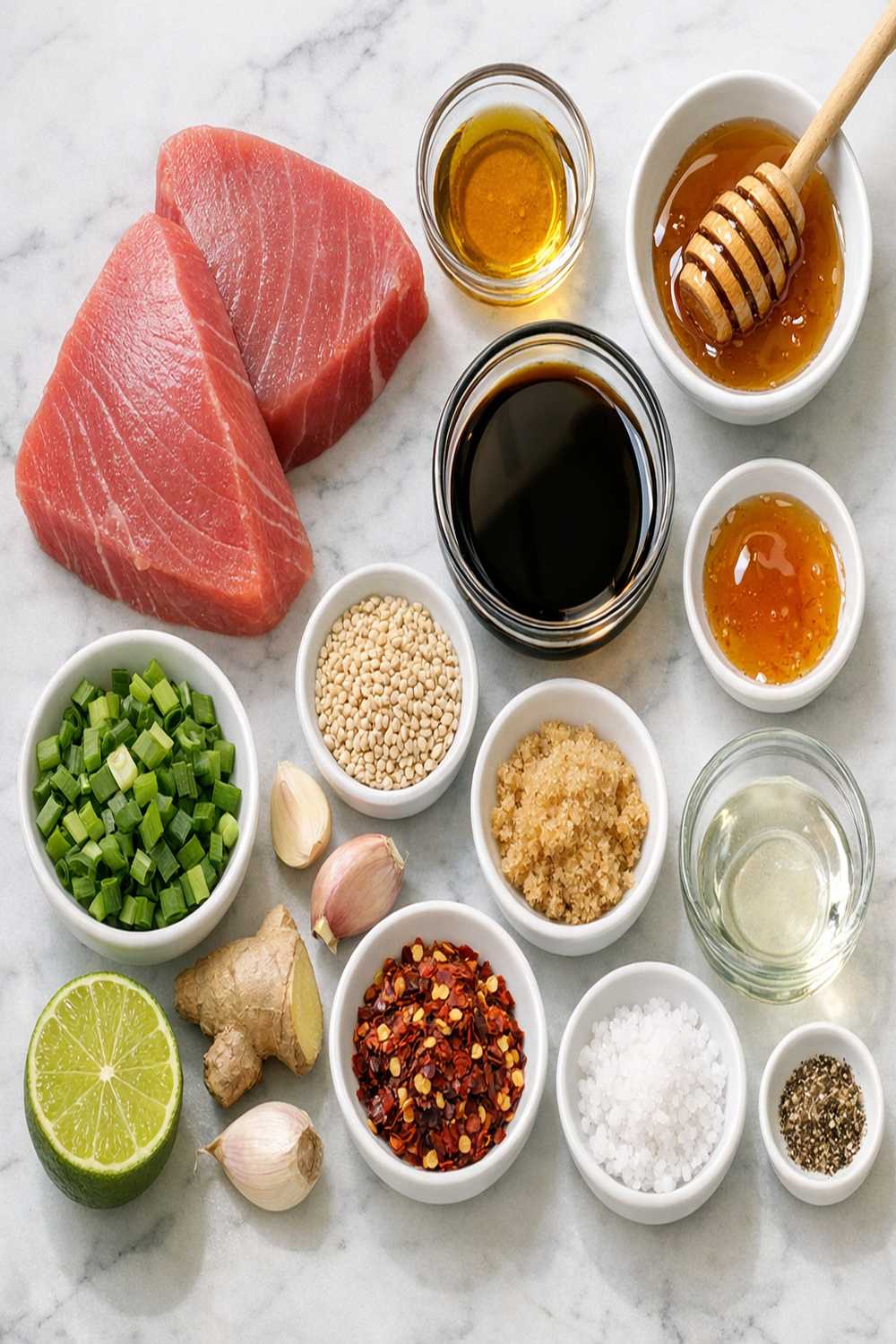
Before I dive into the ingredient list, I want you to know that this is one of those recipes where quality genuinely matters. Fresh ahi tuna is the star here, so don’t skip on that. Everything else should be good quality too—real sesame oil, fresh citrus, good soy sauce. Let me walk you through what you need.
- 2 tablespoons soy sauce or tamari (use tamari if you need gluten-free, or coconut aminos for soy-free)
- Optional: fresh cilantro or sliced green scallions (for garnish)
- 2 tablespoons fresh lemon juice (from about 1 large lemon, or use fresh lime juice instead)
- Optional: sriracha mayo (homemade by mixing sriracha into your favorite mayo, or store-bought)
- 2 ½ pounds fresh ahi tuna steaks (about 1 ½ to 1 ⅔ inches thick, sushi-grade from a reputable fishmonger)
- 2 teaspoons garlic powder (or use 2 fresh cloves minced, though powder gives a cleaner flavor)
- 1 teaspoon freshly ground black pepper (please grind your own—pre-ground loses flavor fast)
- 2 tablespoons unrefined olive oil or avocado oil (for searing the tuna)
- 1 teaspoon cane sugar or pure maple syrup (just a touch to round out the flavor)
- 1 teaspoon fine sea salt (adjust based on your soy sauce saltiness)
- 1 tablespoon toasted sesame oil (this is darker and more flavorful than regular sesame oil)
How to Make Ahi Tuna Marinade Recipe?
This process is genuinely simple, but I’m going to walk you through each step with details about what you’re looking for. The key is respecting the timing—marinating long enough to develop flavor, but not so long that the acid starts to “cook” the raw fish. Let’s get into it.
Step 1: Make Your Marinade Base
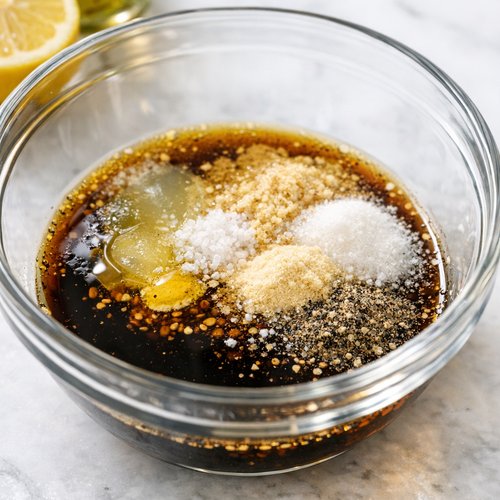
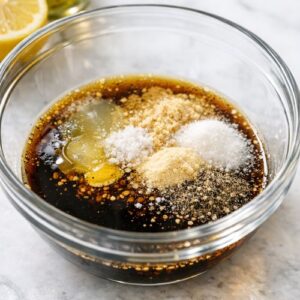
Grab a medium bowl or glass measuring cup and add your soy sauce, fresh lemon juice, toasted sesame oil, garlic powder, sugar, salt, and black pepper. Use a fork or small whisk to combine everything together. You want this to be well mixed—the sugar should dissolve into the liquid, and the seasonings should be evenly distributed. This takes maybe 2 minutes. The mixture should look smooth and taste balanced: salty, a little sweet, with that distinctive sesame flavor coming through underneath.
Step 2: Prepare Your Tuna Steaks
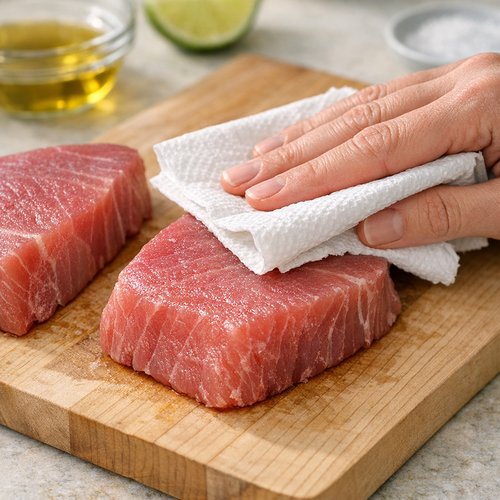
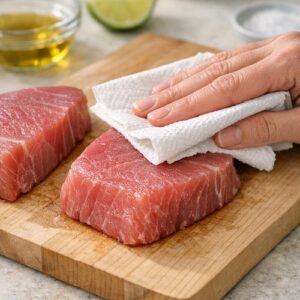
Pat your ahi tuna steaks completely dry with paper towels. This is important—excess moisture on the surface will create steam when you sear, which means you won’t get that beautiful golden crust. Really take your time here and make sure both sides and the edges are dry. Place your dried steaks in a glass or ceramic baking dish. I specifically recommend glass or ceramic because they won’t react with the acidic marinade the way metal can.
Step 3: Marinate the Tuna
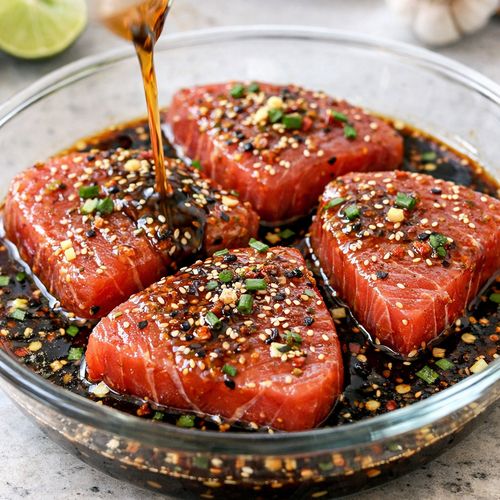
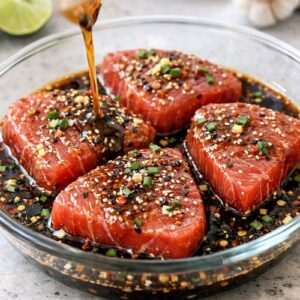
Pour your marinade over the tuna steaks, making sure to coat them thoroughly. You might need to gently turn each steak to get both sides covered. Cover the dish tightly with plastic wrap or a lid and pop it in the refrigerator. Marinate for at least 3 hours, but 4 to 6 hours is ideal. At the halfway point (about 2 to 3 hours in), gently flip each steak so the other side gets exposed to the marinade.
Don’t marinate longer than about 8 hours—the citric acid will start to denature the fish’s proteins and turn the exterior slightly opaque and mushy, which isn’t what we want. We’re looking for bright flavor without compromising the texture.
Step 4: Get Your Pan Ready
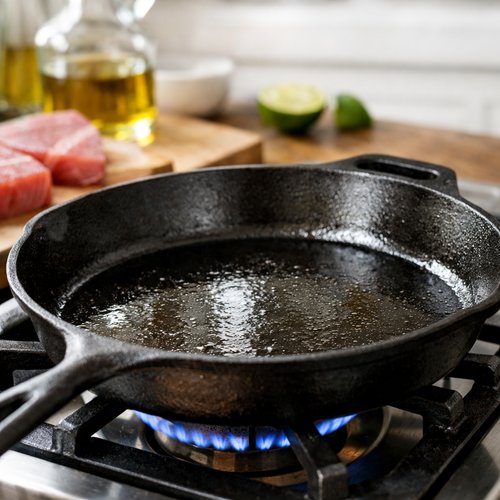
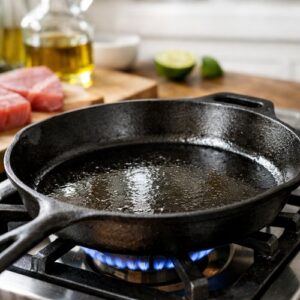
Remove the tuna from the fridge about 10 minutes before you plan to cook it. This helps it cook more evenly. While you’re waiting, place a large heavy skillet (cast iron or stainless steel work beautifully) over medium-high heat. Add 2 tablespoons of olive oil or avocado oil and let it get hot—you want it seriously hot. The oil should shimmer and move easily in the pan, and it should smell fragrant but not burnt.
Here’s a pro tip from my cooking background: if you drop a tiny piece of tuna into the pan and it sizzles aggressively and immediately, your heat is right. This is crucial for getting that golden crust.
Step 5: Sear Your Tuna Steaks
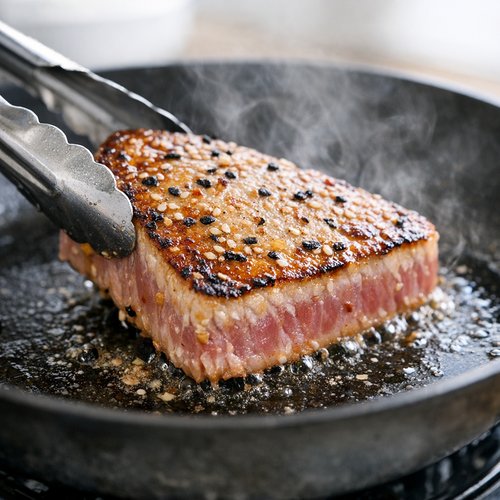
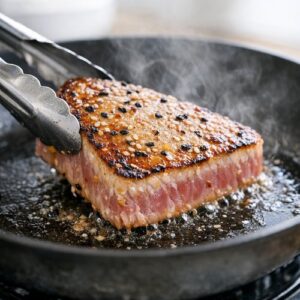
Carefully remove each tuna steak from the marinade—let excess marinade drip off back into the dish—and place it gently in your hot pan. You’ll hear an immediate sizzle. Sear for 1 ½ minutes on the first side without moving it. This creates that beautiful golden-brown crust. If your steaks are thinner than 1 ½ inches, reduce this to 1 minute.
Using a flat steel spatula, carefully flip each steak and sear the other side for another 1 ½ minutes. If you’re cooking thinner steaks, again, just 1 minute per side. The center of the fish should still be barely warm and quite rare in the middle—this is exactly what you want. The exterior should be golden brown and caramelized, with a thin band of cooked fish just underneath.
Step 6: Rest and Slice Your Tuna
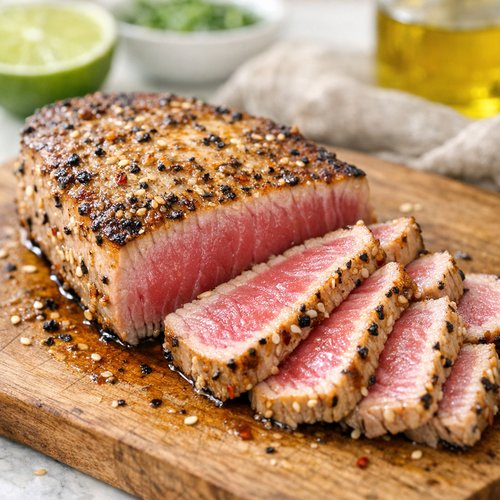
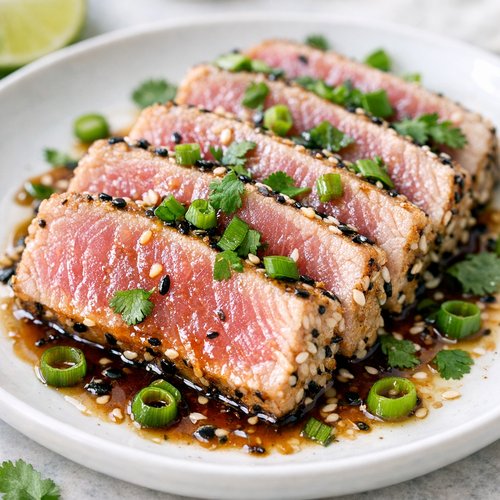
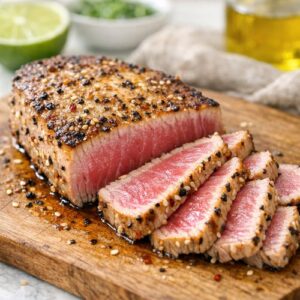
Transfer your seared tuna steaks to a cutting board and let them rest for 5 full minutes. This allows the proteins to relax slightly and helps retain the juices. While they’re resting, grab a very sharp knife—a long serrated knife works beautifully here. Slice against the grain into strips about ¼ inch thick. You should be able to see the barely-cooked center and the golden-brown exterior on each slice.
Step 7: Serve and Enjoy
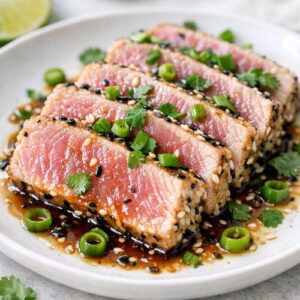
Serve your sliced ahi tuna warm or at room temperature. If you’re using the optional garnishes, scatter cilantro or green scallions over the top. Drizzle with sriracha mayo if you like a little heat and creaminess. Serve immediately over greens, with rice, or however you’ve decided to enjoy it.
Tips and Tricks
- Source your tuna carefully – This dish lives or dies by the quality of your fish. Go to a fishmonger you trust and ask for sushi-grade or sashimi-grade ahi. It should smell like the ocean, not fishy. Ask when it was delivered that day. The fresher, the better.
- Don’t skip the drying step – Moisture is the enemy of a good sear. Those extra 2 minutes with paper towels make a real difference in how golden your crust gets.
- Use a meat thermometer if you’re nervous – The center should register about 110°F for rare, which is what we want. If you prefer your fish more cooked, you can go to 125°F for medium-rare, but honestly, this recipe shines with rare tuna.
- Save your leftover marinade – If you have any marinade left after you remove the tuna, you can strain it and use it as a drizzle sauce for your finished dish or over rice. It’s too good to waste.
- Room temperature vs. warm – Both work beautifully. I love serving this warm right out of the pan in winter, but in summer, letting it cool to room temperature and serving it over a big salad is my favorite move.
- Make it a bowl meal – Layer sushi rice or black rice as your base, top with your sliced tuna, add steamed or roasted vegetables, and drizzle with that sesame-tamari sauce (1 teaspoon sesame oil plus 1 tablespoon tamari mixed together). It’s so satisfying and feels like a complete meal.
Expert’s Nutritional Tip
As a registered dietitian, I get asked a lot about whether seared ahi tuna is actually healthy or if it’s just restaurant indulgence food. Here’s the truth: this is genuinely nutritious. Ahi tuna is one of the best sources of omega-3 fatty acids, which support heart health and brain function. It’s also rich in selenium, a powerful antioxidant, and B vitamins for energy metabolism.
The sesame oil in this marinade adds another layer of nutrition—it contains compounds called lignans that have antioxidant properties. And here’s something I love about this particular recipe: the citrus juice actually enhances your body’s ability to absorb the iron in the fish. That’s not just delicious cooking; that’s nutritional synergy happening on your plate.
One serving of this tuna (about 4 ounces of cooked fish) delivers roughly 28 grams of protein, only about 1.5 grams of fat, and almost no carbohydrates. It’s the kind of food that tastes indulgent but genuinely supports your health goals.
Make-Ahead Guide
One of my favorite things about this recipe is how well it works for meal prep. Here’s my system for getting the most out of your time in the kitchen.
The night before: Mix your marinade and marinate your tuna steaks. Cover everything tightly and refrigerate overnight. The flavors actually deepen slightly with the extra time, so this is a perfect prep-ahead move.
Same day serving: Remove the tuna from the fridge about 10 minutes before you’re ready to cook. Sear as directed. You can slice the cooked tuna and store it in an airtight container in the fridge for up to 3 days.
For the week: If you’re prepping multiple steaks, you can marinate them all at once in a larger dish, then sear and slice each batch as you need them. Cooked sliced tuna stays fresh and delicious for 3 to 4 days refrigerated. I like to store it with a piece of parchment paper between the layers so it doesn’t stick together.
A note on freezing: Raw marinated tuna can be frozen for up to 2 months if you wrap it really well in plastic wrap and then foil. However, cooked tuna doesn’t freeze particularly well—the texture gets a bit mushy when thawed. Eat it fresh or within a few days.
Common Mistakes to Avoid
- Overcooking the fish – This is the biggest one. People get nervous about serving rare fish and end up searing it too long. The whole point is that barely-cooked center. Trust your timing. If you’re genuinely uncomfortable with rare fish, bring your pan temperature down slightly and cook a little longer, but this will reduce that beautiful golden crust. Better option: start with a very small piece to build your confidence.
- Marinating too long – I’ve made this mistake myself. Beyond 8 hours, the citric acid starts to change the fish’s texture in a way you don’t want. Set a timer and stick to it. 4 to 6 hours is the sweet spot.
- Using old ahi tuna – If there’s any fishy smell or the color looks dull instead of vibrant deep red, walk away. This dish only works with really fresh fish. There’s no sauce heavy enough to save mediocre tuna.
- Skipping the drying step – I know I mentioned this in tips, but it’s worth repeating because it makes such a difference. Wet fish steams instead of sears. Dry fish gets that golden crust. Take the extra 2 minutes.
Seasonal Variations
Spring: Add 1 teaspoon of fresh grated ginger and swap the lemon juice for lime juice. Fresh mint or basil as a garnish is beautiful. The brighter citrus and herbs match the season perfectly.
Summer: This is when I love serving this cold or at room temperature over a massive salad with cucumber, radish, avocado, and a sesame-ginger dressing. Add a touch of wasabi to your sriracha mayo for extra zip on hot days.
Fall: Swap half the lemon juice for fresh orange juice. The slight sweetness is beautiful when you’re transitioning to heavier meals. Add toasted sesame seeds as a garnish for extra crunch and nuttiness.
Winter: Serve warm over a bed of wilted spinach or other winter greens. Add a touch of white miso to your marinade for deeper umami flavor. The warmth feels more comforting in colder months.
Can I Store Ahi Tuna Marinade Recipe?
Yes, and I want to give you the full breakdown on storage because it matters for food safety with raw fish.
Raw marinated tuna: Keeps in an airtight container in the refrigerator for up to 24 hours. I don’t recommend longer than this because while the marinade does have preservative properties from the citrus and salt, we’re not actually curing the fish here. If you need to marinate longer, freeze it.
Cooked sliced tuna: Store in an airtight container in the refrigerator for 3 to 4 days. Make sure it’s completely cooled before you store it. I like to layer it with parchment paper to prevent sticking.
Leftover marinade: If you have extra marinade that didn’t touch raw fish, you can store it in a clean container in the fridge for up to 1 week. Use it as a dressing for salads or drizzle it over cooked fish.
Freezing options: Raw marinated tuna can be frozen for up to 2 months if wrapped very tightly in plastic wrap and then foil. Thaw overnight in the refrigerator before cooking. Cooked tuna doesn’t freeze well, so eat it fresh.
Nutrition Information
Based on USDA data, here’s what you’re getting per serving (this assumes 4 servings from 2 ½ pounds of tuna, about 10 ounces per serving before cooking):
Per Serving (approximately 10 oz raw, about 7-8 oz cooked):
Calories: 280 | Protein: 48g | Fat: 8g | Carbohydrates: 2g | Fiber: 0g | Sodium: 850mg (mostly from the soy sauce) | Cholesterol: 65mg
This is a serious protein powerhouse. Nearly half the calories come from protein, making it incredibly satiating. The fat content is low but includes those crucial omega-3 fatty acids. The sodium is moderate—most of it from the soy sauce in the marinade. If you’re watching sodium, you can reduce the soy sauce slightly, though it does affect flavor.
Key micronutrients include selenium (a full day’s worth in one serving), B vitamins especially B12 and niacin, and iodine. This is genuinely one of the most nutrient-dense proteins you can eat.
What Can I Serve With Ahi Tuna Marinade Recipe?
The beauty of this dish is how flexible it is for serving. You can go casual or elegant, warm or cold, simple or elaborate. Let me give you my favorite combinations.
- Over mixed greens with sesame dressing – Toss baby spinach, arugula, and shredded cabbage with a simple sesame-tamari vinaigrette. Top with your sliced tuna, add cucumber slices, shredded carrots, and toasted sesame seeds. This is my go-to lunch bowl.
- With sushi rice and pickled vegetables – Layer warm sushi rice in a bowl, top with your tuna, add pickled ginger, sliced avocado, cucumber, and seaweed salad. Drizzle with sriracha mayo. It’s like having sushi rolls but without the rolling hassle.
- On a bed of roasted vegetables – Roast broccoli, snap peas, and bell peppers with a little sesame oil and soy sauce. Serve warm with your sliced tuna on top. Add a drizzle of the leftover marinade for extra flavor.
- Cold sesame noodle salad – I actually have a favorite cold sesame noodle dressing from my cookbook Quicker Than Quick that pairs beautifully with this tuna. Cook soba or ramen noodles, chill them, toss with the dressing, then top with your sliced tuna and fresh herbs. It’s a complete meal that’s surprisingly light.
- With black rice and roasted beets – The earthiness of the beets plays so nicely against the bright, delicate tuna. Add some greens and you’ve got something that tastes restaurant-fancy but comes together quickly.
- On a simple green salad with avocado – Sometimes the simplest is best. Tender lettuce, ripe avocado, your sliced tuna, a squeeze of lemon. That’s it. Sometimes less really is more.
Substitutes
- Other fish for the ahi tuna – You can absolutely use swordfish steaks, mahi-mahi, or even thick salmon steaks with this marinade. The cooking time might vary slightly—swordfish is meatier so might take 2 minutes per side, while salmon is softer and might only need 1 minute. Choose what’s freshest at your fishmonger.
- Lime juice instead of lemon – Go for it. Lime juice actually works slightly better in this marinade if you ask me. The flavor is a tiny bit more complex.
- Coconut aminos instead of soy sauce – This is a great option if you’re avoiding soy or looking for a gluten-free alternative. Use the same amount. The flavor is slightly sweeter and a tiny bit less salty, which I actually enjoy.
- Regular sesame oil mixed with avocado oil – If you don’t have toasted sesame oil, mix 1 teaspoon of regular sesame oil with 2 teaspoons of avocado oil or another neutral oil. You won’t get quite as much sesame flavor, but it’ll work.
- Brown sugar instead of cane sugar – Use the same amount. The flavor will be slightly deeper and caramelly, which is lovely.
- Fresh garlic instead of powder – Mince 2 fresh cloves very fine and use that instead of garlic powder. The flavor will be more assertive and fresh, which some people prefer.

Ahi Tuna Marinade Recipe
Ingredients
Method
- Grab a medium bowl or glass measuring cup and add your soy sauce, fresh lemon juice, toasted sesame oil, garlic powder, sugar, salt, and black pepper. Use a fork or small whisk to combine everything together. You want this to be well mixed—the sugar should dissolve into the liquid, and the seasonings should be evenly distributed. This takes maybe 2 minutes. The mixture should look smooth and taste balanced: salty, a little sweet, with that distinctive sesame flavor coming through underneath.
- Pat your ahi tuna steaks completely dry with paper towels. This is important—excess moisture on the surface will create steam when you sear, which means you won't get that beautiful golden crust. Really take your time here and make sure both sides and the edges are dry. Place your dried steaks in a glass or ceramic baking dish. I specifically recommend glass or ceramic because they won't react with the acidic marinade the way metal can.
- Pour your marinade over the tuna steaks, making sure to coat them thoroughly. You might need to gently turn each steak to get both sides covered. Cover the dish tightly with plastic wrap or a lid and pop it in the refrigerator. Marinate for at least 3 hours, but 4 to 6 hours is ideal. At the halfway point (about 2 to 3 hours in), gently flip each steak so the other side gets exposed to the marinade. Don't marinate longer than about 8 hours—the citric acid will start to denature the fish's proteins and turn the exterior slightly opaque and mushy, which isn't what we want. We're looking for bright flavor without compromising the texture.
- Remove the tuna from the fridge about 10 minutes before you plan to cook it. This helps it cook more evenly. While you're waiting, place a large heavy skillet (cast iron or stainless steel work beautifully) over medium-high heat. Add 2 tablespoons of olive oil or avocado oil and let it get hot—you want it seriously hot. The oil should shimmer and move easily in the pan, and it should smell fragrant but not burnt. Here's a pro tip from my cooking background: if you drop a tiny piece of tuna into the pan and it sizzles aggressively and immediately, your heat is right. This is crucial for getting that golden crust.
- Carefully remove each tuna steak from the marinade—let excess marinade drip off back into the dish—and place it gently in your hot pan. You'll hear an immediate sizzle. Sear for 1 ½ minutes on the first side without moving it. This creates that beautiful golden-brown crust. If your steaks are thinner than 1 ½ inches, reduce this to 1 minute. Using a flat steel spatula, carefully flip each steak and sear the other side for another 1 ½ minutes. If you're cooking thinner steaks, again, just 1 minute per side. The center of the fish should still be barely warm and quite rare in the middle—this is exactly what you want. The exterior should be golden brown and caramelized, with a thin band of cooked fish just underneath.
- Transfer your seared tuna steaks to a cutting board and let them rest for 5 full minutes. This allows the proteins to relax slightly and helps retain the juices. While they're resting, grab a very sharp knife—a long serrated knife works beautifully here. Slice against the grain into strips about ¼ inch thick. You should be able to see the barely-cooked center and the golden-brown exterior on each slice.
- Serve your sliced ahi tuna warm or at room temperature. If you're using the optional garnishes, scatter cilantro or green scallions over the top. Drizzle with sriracha mayo if you like a little heat and creaminess. Serve immediately over greens, with rice, or however you've decided to enjoy it.
Notes
Tried this recipe?
Let us know how it was!FAQs
Is it safe to eat rare tuna?
Yes, when you’re using sushi-grade or sashimi-grade tuna from a reputable fishmonger. These fish are handled differently and flash-frozen to kill parasites, making them safe to eat raw. If you’re uncomfortable with rare fish, you can sear your tuna longer to cook it through more—just know that you’ll lose some of that tender, buttery texture that makes this dish special. The fish will still be delicious, just different. Always buy from a trusted source and ask if the fish is sushi-grade.
Can I cook this tuna in the oven instead of on the stovetop?
You could broil it, which would give you some sear, but you won’t get that beautiful golden crust that happens in a hot pan. If you absolutely prefer oven cooking, heat your broiler to high, place your tuna on a broiler pan, broil about 4 inches from the heat for 2 to 3 minutes per side for rare. But honestly, the pan method is faster and gives better results. Give it a try—pan searing is easier than you think.
What does sushi-grade tuna mean and how do I find it?
Sushi-grade (also called sashimi-grade) tuna has been flash-frozen immediately after being caught to kill potential parasites, making it safe to eat raw or barely cooked. When you buy it, it’s often thawed by the fishmonger. Go to a reputable fish counter—ask them specifically for sushi-grade or sashimi-grade ahi, and ask when it was delivered. It should smell clean and oceanic, never “fishy.” If your grocery store doesn’t have a good fish counter, find a specialty seafood market or order online from a trusted source.
Can I marinate the tuna overnight?
You can marinate it for up to 8 hours, and honestly, 6 to 8 hours will give you the deepest flavor. But don’t go beyond 8 hours—the citric acid will start to denature the fish’s proteins and you’ll lose that tender texture. If you need to marinate longer, freeze the raw marinated tuna instead. You can also marinate it the night before, then cook it the next day—just remove it from the fridge 10 minutes before you’re ready to sear.
Why does my tuna steak have that white stuff on it?
That white stuff is albumin, a protein that rises to the surface when you sear fish. It’s completely harmless and normal. Some people wipe it off with a paper towel during cooking for a cleaner presentation, but it’s entirely optional. It doesn’t affect the taste at all.
Can I use frozen tuna for this recipe?
If you’re using individually frozen tuna steaks from a reputable brand, you can thaw them overnight in the refrigerator and use them. However, fresh ahi from a good fishmonger will always be superior. When fish is frozen, the ice crystals that form can damage the cell structure slightly, affecting texture. That said, frozen sushi-grade tuna is much better than fresh non-sushi-grade tuna from a questionable source. Go with the best quality you can access locally.
More Recipes You’ll Love
- Asian Soy Ginger Salmon – If you love this marinade, you’ll adore this salmon version. Same flavor profile, similar cooking method, absolutely delicious.
- Ahi Recipe – Another fantastic way to prepare ahi tuna with different seasoning and techniques.
- Barbecue Chicken Recipe With Barbecue Sauce – For when you want something warm and comforting instead of fish.
- Baked Haddock With Ritz Crackers Recipe – A completely different fish preparation that’s cozy and satisfying.
- This Easy Chicken Dinner – Worth adding to your recipe collection.
Honestly, I make this ahi tuna marinade recipe at least once a month, usually more often in summer. It’s become my go-to when I want to feel like I’m eating something fancy but I don’t want to spend hours in the kitchen. The marinade does most of the work, and the searing is just a quick flourish at the end. You’re going to love how beautiful it looks, how incredible it tastes, and how genuinely good for you it is. Start with the freshest tuna you can find, respect the timing, and don’t overthink it. Your dinner guests—or just you enjoying a really good meal—will be so impressed.
Happy cooking!