
Ingredients
Method
Step 1: Make Your Marinade Base
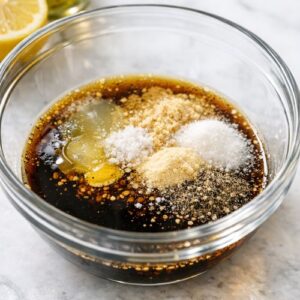
- Grab a medium bowl or glass measuring cup and add your soy sauce, fresh lemon juice, toasted sesame oil, garlic powder, sugar, salt, and black pepper. Use a fork or small whisk to combine everything together. You want this to be well mixed—the sugar should dissolve into the liquid, and the seasonings should be evenly distributed. This takes maybe 2 minutes. The mixture should look smooth and taste balanced: salty, a little sweet, with that distinctive sesame flavor coming through underneath.
Step 2: Prepare Your Tuna Steaks
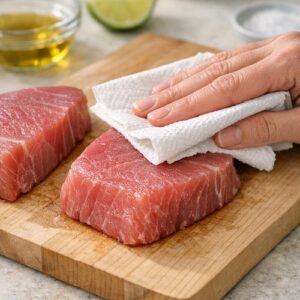
- Pat your ahi tuna steaks completely dry with paper towels. This is important—excess moisture on the surface will create steam when you sear, which means you won't get that beautiful golden crust. Really take your time here and make sure both sides and the edges are dry. Place your dried steaks in a glass or ceramic baking dish. I specifically recommend glass or ceramic because they won't react with the acidic marinade the way metal can.
Step 3: Marinate the Tuna
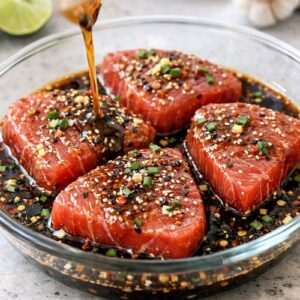
- Pour your marinade over the tuna steaks, making sure to coat them thoroughly. You might need to gently turn each steak to get both sides covered. Cover the dish tightly with plastic wrap or a lid and pop it in the refrigerator. Marinate for at least 3 hours, but 4 to 6 hours is ideal. At the halfway point (about 2 to 3 hours in), gently flip each steak so the other side gets exposed to the marinade. Don't marinate longer than about 8 hours—the citric acid will start to denature the fish's proteins and turn the exterior slightly opaque and mushy, which isn't what we want. We're looking for bright flavor without compromising the texture.
Step 4: Get Your Pan Ready
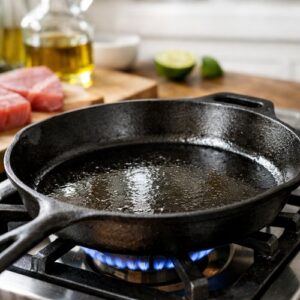
- Remove the tuna from the fridge about 10 minutes before you plan to cook it. This helps it cook more evenly. While you're waiting, place a large heavy skillet (cast iron or stainless steel work beautifully) over medium-high heat. Add 2 tablespoons of olive oil or avocado oil and let it get hot—you want it seriously hot. The oil should shimmer and move easily in the pan, and it should smell fragrant but not burnt. Here's a pro tip from my cooking background: if you drop a tiny piece of tuna into the pan and it sizzles aggressively and immediately, your heat is right. This is crucial for getting that golden crust.
Step 5: Sear Your Tuna Steaks
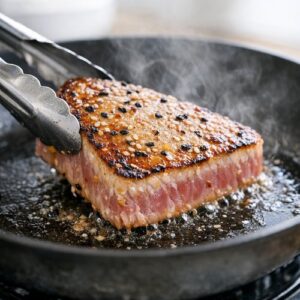
- Carefully remove each tuna steak from the marinade—let excess marinade drip off back into the dish—and place it gently in your hot pan. You'll hear an immediate sizzle. Sear for 1 ½ minutes on the first side without moving it. This creates that beautiful golden-brown crust. If your steaks are thinner than 1 ½ inches, reduce this to 1 minute. Using a flat steel spatula, carefully flip each steak and sear the other side for another 1 ½ minutes. If you're cooking thinner steaks, again, just 1 minute per side. The center of the fish should still be barely warm and quite rare in the middle—this is exactly what you want. The exterior should be golden brown and caramelized, with a thin band of cooked fish just underneath.
Step 6: Rest and Slice Your Tuna
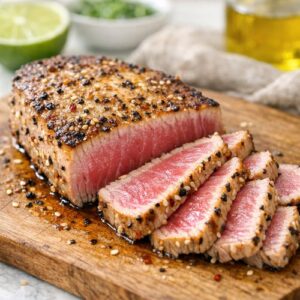
- Transfer your seared tuna steaks to a cutting board and let them rest for 5 full minutes. This allows the proteins to relax slightly and helps retain the juices. While they're resting, grab a very sharp knife—a long serrated knife works beautifully here. Slice against the grain into strips about ¼ inch thick. You should be able to see the barely-cooked center and the golden-brown exterior on each slice.
Step 7: Serve and Enjoy
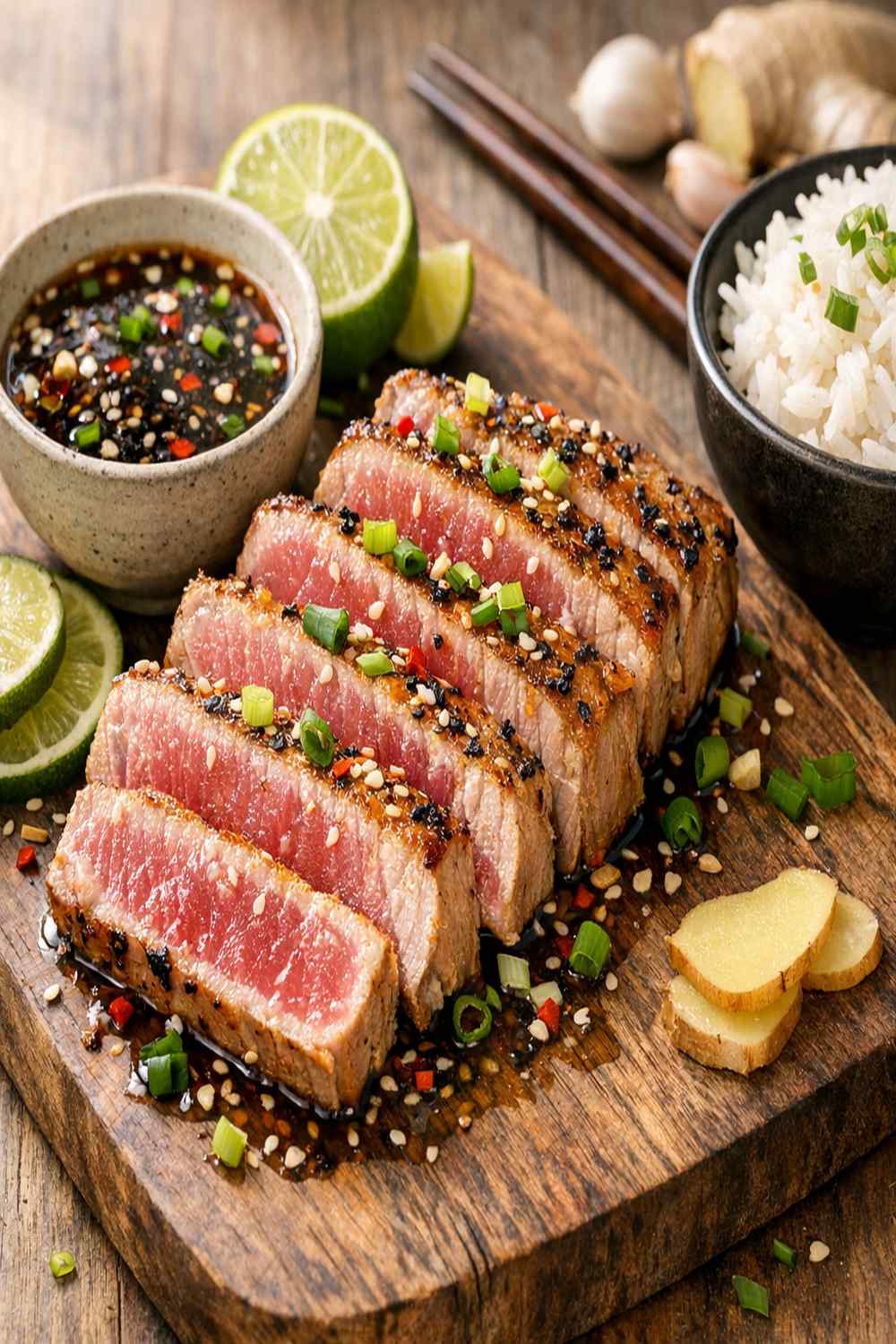
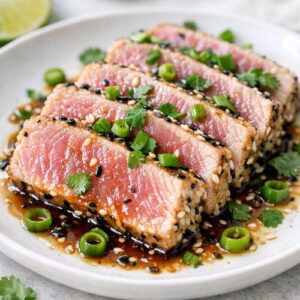
- Serve your sliced ahi tuna warm or at room temperature. If you're using the optional garnishes, scatter cilantro or green scallions over the top. Drizzle with sriracha mayo if you like a little heat and creaminess. Serve immediately over greens, with rice, or however you've decided to enjoy it.
Notes
- Source your tuna carefully - This dish lives or dies by the quality of your fish. Go to a fishmonger you trust and ask for sushi-grade or sashimi-grade ahi. It should smell like the ocean, not fishy. Ask when it was delivered that day. The fresher, the better.
- Don't skip the drying step - Moisture is the enemy of a good sear. Those extra 2 minutes with paper towels make a real difference in how golden your crust gets.
- Use a meat thermometer if you're nervous - The center should register about 110°F for rare, which is what we want. If you prefer your fish more cooked, you can go to 125°F for medium-rare, but honestly, this recipe shines with rare tuna.
- Save your leftover marinade - If you have any marinade left after you remove the tuna, you can strain it and use it as a drizzle sauce for your finished dish or over rice. It's too good to waste.
- Room temperature vs. warm - Both work beautifully. I love serving this warm right out of the pan in winter, but in summer, letting it cool to room temperature and serving it over a big salad is my favorite move.
- Make it a bowl meal - Layer sushi rice or black rice as your base, top with your sliced tuna, add steamed or roasted vegetables, and drizzle with that sesame-tamari sauce (1 teaspoon sesame oil plus 1 tablespoon tamari mixed together). It's so satisfying and feels like a complete meal.