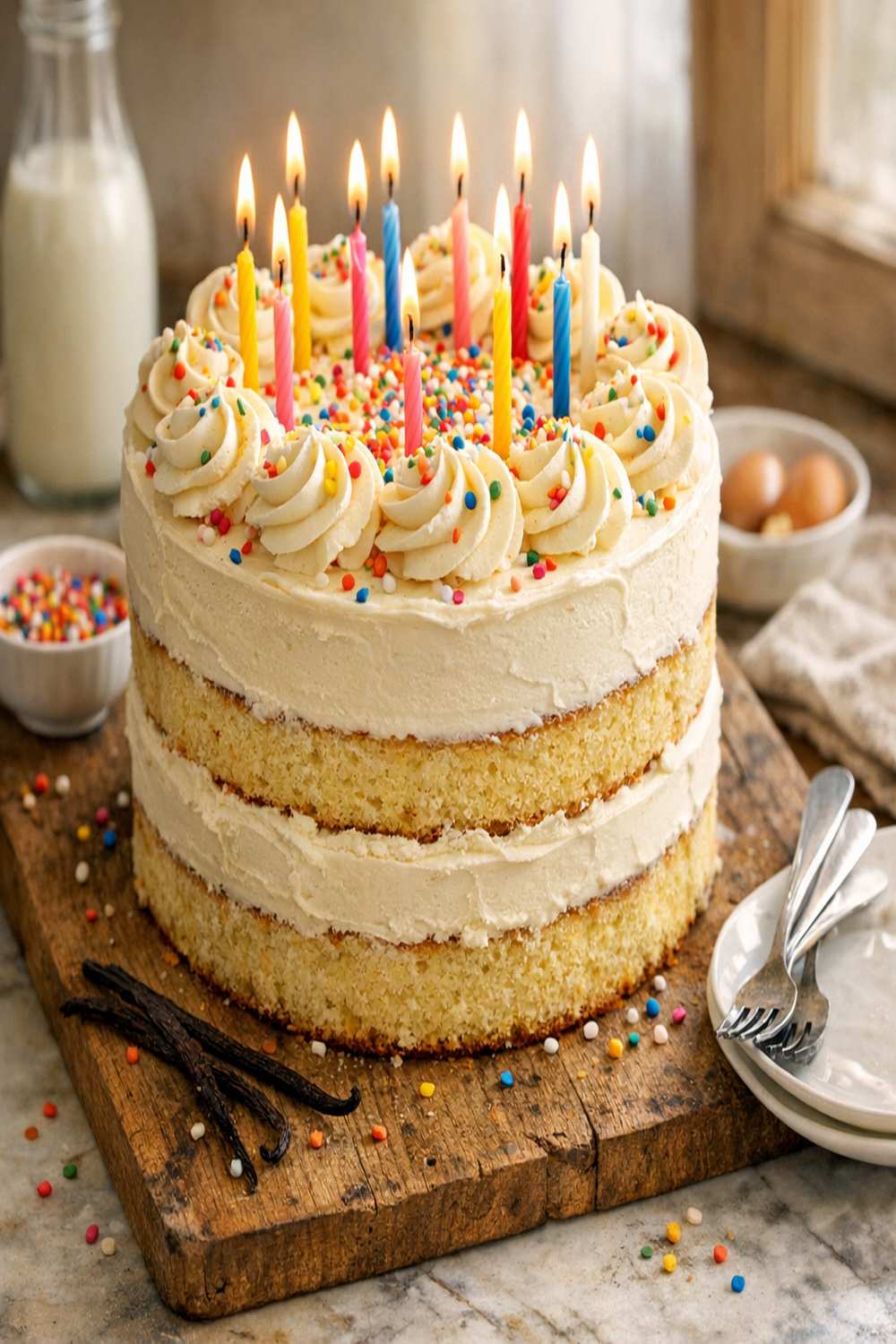

Ingredients
Method
Step 1: Prepare Your Pans and Preheat
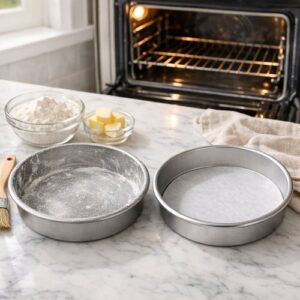
- Start by positioning your oven rack to the center position and preheating to 350°F. This takes about 10-12 minutes. While it heats, prepare two 9-inch round cake pans by coating them lightly with cooking spray or butter, then dusting with a bit of flour. Tap out the excess. Line the bottoms with parchment paper rounds—this guarantees your cakes will release cleanly.
Step 2: Sift Your Dry Ingredients
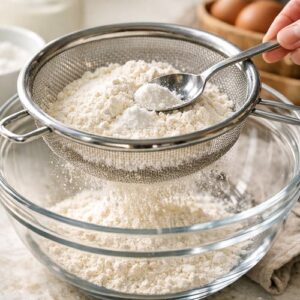
- In a medium bowl, whisk together your flour, baking powder, and salt. I actually sift these ingredients together using a fine-mesh sieve. This aerates the flour slightly and ensures the baking powder distributes evenly. You want no lumps in the mixture. Set aside.
Step 3: Cream Butter and Sugar
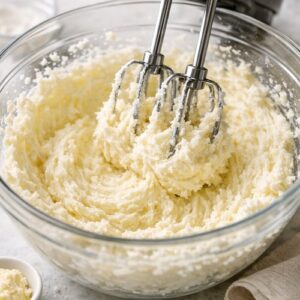
- In a large mixing bowl, beat your softened butter and granulated sugar together on medium speed for 3-4 minutes. This is important. The mixture should become pale, fluffy, and noticeably lighter in color. You're incorporating air, which helps the cake rise. Scrape down the bowl halfway through.
Step 4: Add Eggs One at a Time
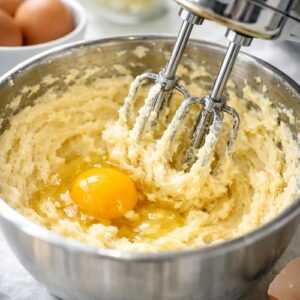
- Add your room-temperature eggs one at a time, beating well after each addition. This takes about 30 seconds per egg. After you've added all four, the mixture should look creamy and slightly fluffy. Don't skip this step—it's why your cake will be tender. If the mixture ever looks curdled, don't panic. Just keep mixing; it'll come together.
Step 5: Add Vanilla and Oil
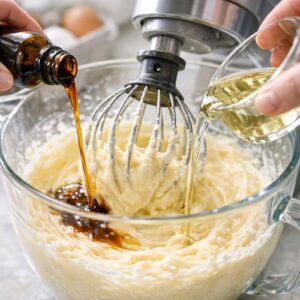
- Pour in your vanilla extract and oil, then mix on medium speed until completely combined, about 1 minute. The oil won't be visible—that's fine. It's integrating into the batter and will create that incredibly moist texture.
Step 6: Alternate Dry and Wet Ingredients
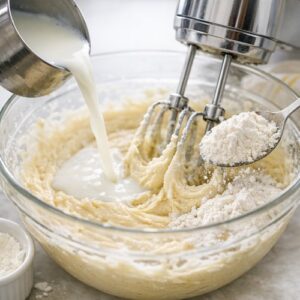
- Here's where care matters. Add your dry ingredients in three additions and your milk in two additions, beginning and ending with the dry ingredients. So: dry, wet, dry, wet, dry. Mix on low speed until just combined after each addition. This prevents overmixing, which toughens cake. Stop as soon as you don't see streaks of flour. Scrape down the bowl between additions.
Step 7: Divide and Bake
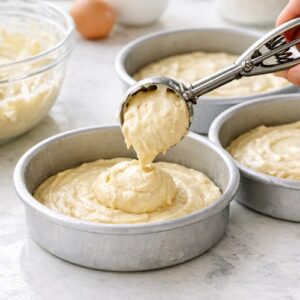
- Divide your batter evenly between your prepared pans. I use an ice cream scoop for even distribution. Tap each pan gently on the counter twice to release air bubbles. Place both pans in the oven on the middle rack, ideally with a little space between them for air circulation. Bake for 28-32 minutes. The cakes are done when a toothpick inserted in the center comes out with just a few moist crumbs. The tops should be golden and spring back when you gently touch the center.
Step 8: Cool Properly
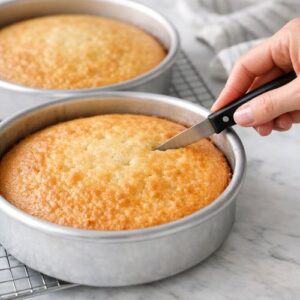
- This step determines whether your cake stays tender or dries out. Let the cakes cool in their pans for 15 minutes. Then run a thin knife around the edge of each cake and turn them out onto wire cooling racks. Remove the parchment paper. Let cool completely at room temperature for at least 2 hours before frosting. You can even refrigerate them for an hour—cold cake is easier to frost.
Step 9: Make Your Frosting
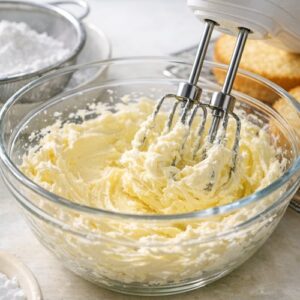
- While cakes cool, sift your powdered sugar into a bowl. In a separate large bowl, beat your softened butter on medium speed until creamy, about 2 minutes. Add the sifted powdered sugar gradually, a cup at a time, beating well after each addition. This prevents lumps. Once all sugar is incorporated, add your vanilla and salt. Beat on medium-high speed for 3-4 minutes until light, fluffy, and pale. Add milk one tablespoon at a time until you reach a spreadable consistency. You want it thick enough to hold peaks but soft enough to spread easily.
Step 10: Assemble Your Cake
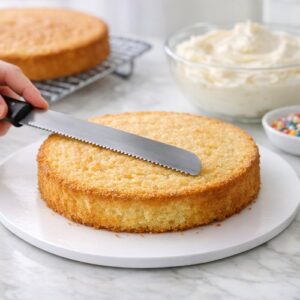
- Place one cake layer on your serving plate or cake board. If you want perfectly level layers, this is where a serrated knife or cake leveler helps. Spread a layer of frosting on top, about ½-inch thick. Top with your second cake layer. Frost the top and sides with remaining frosting. Use an offset spatula and rotate your plate for even coverage.
Nutrition
Notes
- Room temperature ingredients are non-negotiable - Cold eggs and butter won't incorporate properly into the batter, and you'll get a dense cake. Take eggs and butter out of the fridge 30 minutes before baking.
- Don't use imitation vanilla - Real vanilla extract makes a noticeable difference. It costs more upfront but you use so little that a bottle lasts months.
- Sift your powdered sugar - This removes lumps and makes frosting silky smooth. Trust me on this one.
- Use cake flour for maximum tenderness - If you don't have it, you can make a substitute by removing 2 tablespoons of all-purpose flour per cup and replacing with cornstarch.
- Don't overbake by even a minute - Start checking at 28 minutes. The difference between perfect and dry is sometimes just 60 seconds.
- A turntable makes frosting easier - Not essential, but it's genuinely helpful for even coverage. I got mine for $15 and use it constantly.