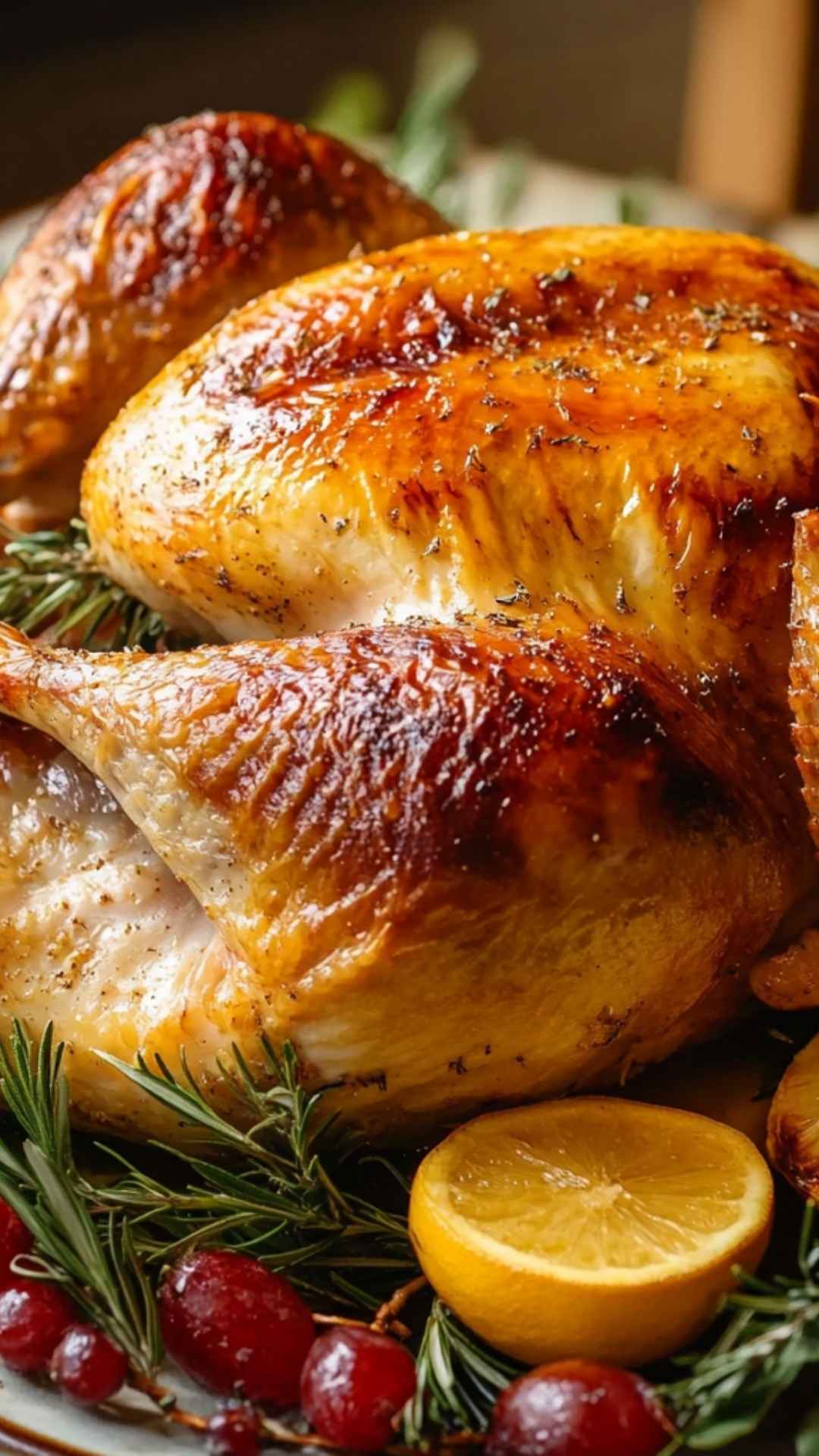

Ingredients
Equipment
Method
Step 1: Prepare Your Turkey
- Before cooking, ensure your turkey is completely thawed, especially if it’s been in the freezer. This can take several days in the fridge, so plan ahead. Remove the neck and giblets from the cavity.
- Give the turkey a good rinse under cool water and pat it dry with paper towels. Dry skin leads to crispy results!
Step 2: Season Generously
- In a mixing bowl, combine softened butter, olive oil, garlic powder, sea salt, and freshly cracked pepper. If using herbs, chop them finely and mix them into the butter. Use your hands to loosen the skin of the turkey carefully. This keeps the meat moist.
- Now, take half of your buttery mixture and rub it directly onto the meat, beneath the skin. Use the remaining mixture to coat the outside of the bird. When finished, stuff the cavity with lemon wedges and any remaining herbs. This adds moisture and subtle flavor during cooking.
Step 3: Preheat Your Oven
- Preheat your oven to 325°F (163°C). While waiting for the oven to heat, place the turkey on a roasting rack in a large roasting pan. This allows air to circulate around the turkey, resulting in even cooking.
Step 4: Add Stock to the Pan
- Pour the chicken, vegetable, or turkey stock into the bottom of the roasting pan. This helps create steam, keeping the meat juicy while it roasts. It also serves as the base for your gravy later on.
Step 5: Roast Your Turkey
- Place the turkey in the oven. A general guideline is to roast for about 13 minutes per pound. So, for a 15-pound turkey, you’re looking at approximately 3 to 3.5 hours.
- Every hour, baste the turkey with the drippings from the pan to keep it moist and to enhance that golden color.
Step 6: Check for Doneness
- Around the last hour, start checking the internal temperature. Insert a meat thermometer into the thickest part of the thigh without touching bone. The turkey is done when it reaches 165°F (74°C).
- If you like crispy skin, give it a few extra minutes under the broiler at the end. Just watch closely to prevent burning!
Step 7: Rest Before Carving
- Once the turkey is out of the oven, it’s essential to let it rest for at least 20-30 minutes. This allows the juices to redistribute for a succulent carving experience.
- However tempting it may be, waiting is crucial. Surprisingly, this step improves texture and moisture.
Step 8: Carve and Serve
- Now, it’s time to carve! Use a sharp carving knife and slice away at the breast meat. Follow with the legs and thighs.
- Serve with your favorite sides. Enjoy every moment—you’ve earned it!
Nutrition
Video
Notes
- Brine the Turkey: For an even juicier bird, consider brining it in a saltwater solution overnight before cooking.
- Use a Meat Thermometer: Always and I mean always use a meat thermometer. It takes the guesswork out of cooking.
- Keep It Simple: Don’t overcrowd the pan with too many veggies; this can steam the turkey rather than roast it.
- Avoid Opening the Oven Door: Each time the door opens, you lose heat. Only check on it when necessary.
- Snack Strategy: Set out snacks and appetizers for guests, so they don’t hang around the kitchen asking, "Is it done yet?"